Sumba — The Beauty of Nature & Culture
An island you feel, not just visit.
Savannah that turns from green to gold, beaches with nobody on them, waterfalls that take an hour to reach, and villages where traditions are still lived rather than performed. We are a local operator based in Waikabubak, and we drive you to all of it.
Tour packages
Every trip is private — never a shared group tour. One air-conditioned vehicle, one driver who also guides, and photography with a mirrorless camera and drone. From IDR 4,100,000 per person.
3D2N · 2 route options
Sumba Tour 3 Days 2 Nights
Two route options for a short trip — stay in the west, or cross the island to East Sumba.
- Package 1: Southwest Sumba – West Sumba
- Package 2: Southwest – West – East Sumba
4D3N · 2 route options
Sumba Tour 4 Days 3 Nights
An extra day for the harder-to-reach waterfalls — Tanggedu and Waimarang in the east, or Matayangu in the centre.
- Package 1: Southwest – West – East Sumba
- Package 2: Southwest Sumba – West Sumba
Why people come to Sumba
It is the least-visited of Indonesia's major islands, and that is precisely the point.
Landscape on a different scale
Savannah hills, beaches, waterfalls and open country that still feels genuinely wide and unmanaged.
Grasslands that change colour
From November to June the savannah is green. From July to October it turns gold. Same hills, two completely different islands.
Beaches that stay empty
White sand, solid limestone headlands, and stretches of coast where you will often be the only people there. Late afternoon is when they are at their best.
Waterfalls worth the walk
Behind Sumba's hills, clear water runs between rock. Getting to most of them takes effort — which is exactly why they are still quiet.
Culture that is still lived
Ikat weaving, the Pasola ritual, and villages where traditions are practised rather than performed. This is not a heritage display; people live here.
Sumba horses and village life
The Sumba horse carries the character of the island: independence, strength, and a place woven into daily life rather than kept apart from it.
Where we take you
12 places across four regencies. Each page tells you the best time to go, how hard the walk is, and what to bring.
Southwest Sumba
Lagoon
Weekuri Lagoon
A turquoise saltwater lagoon fed by seawater seeping through the reef, calm enough to swim in safely.
Beach
Mandorak Beach
A small white-sand cove guarded by two limestone headlands, a few minutes from Weekuri Lagoon.
Traditional village
Ratenggaro Village
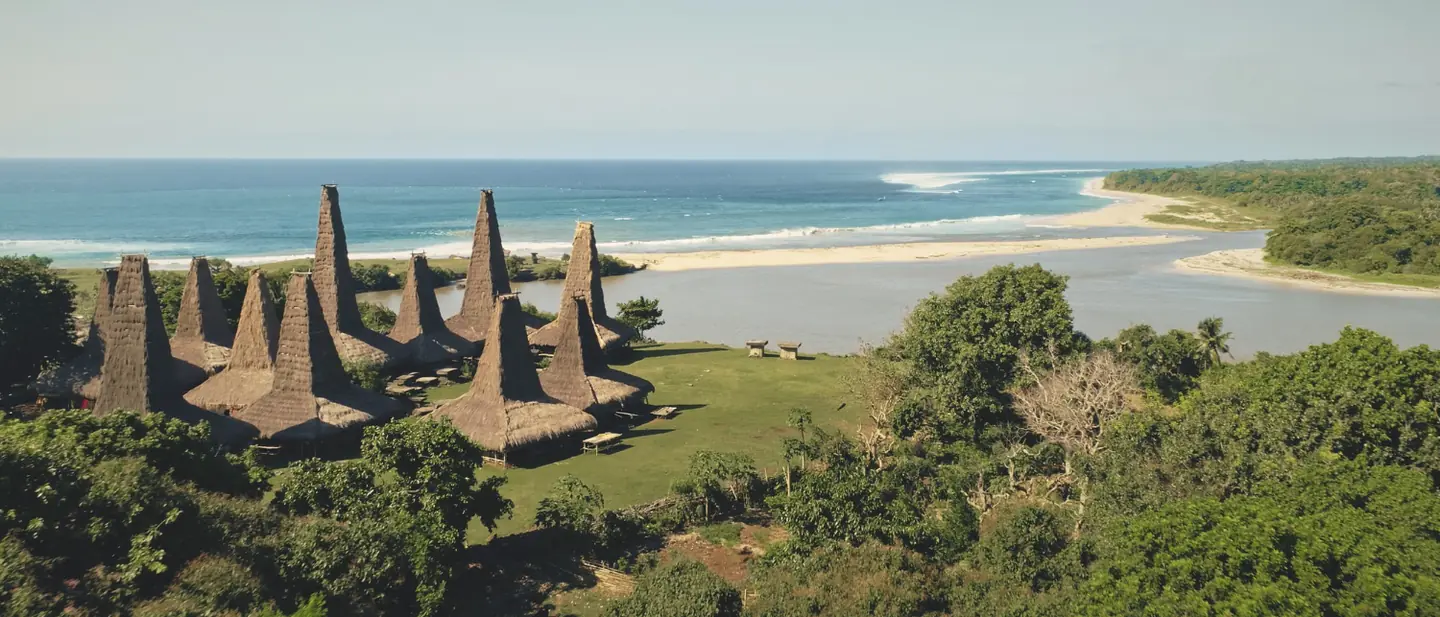
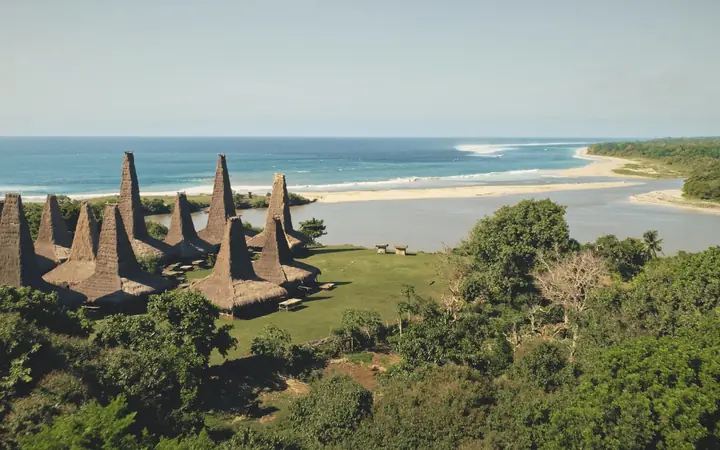
A traditional village on the Kodi coast with the tallest roof towers in Sumba and rows of megalithic tombs facing the sea.
West Sumba
Waterfall
Weekacura Waterfall
A waterfall with tiered natural rock pools, ringed by rice fields, and far easier to reach than Sumba's other falls.
Traditional village
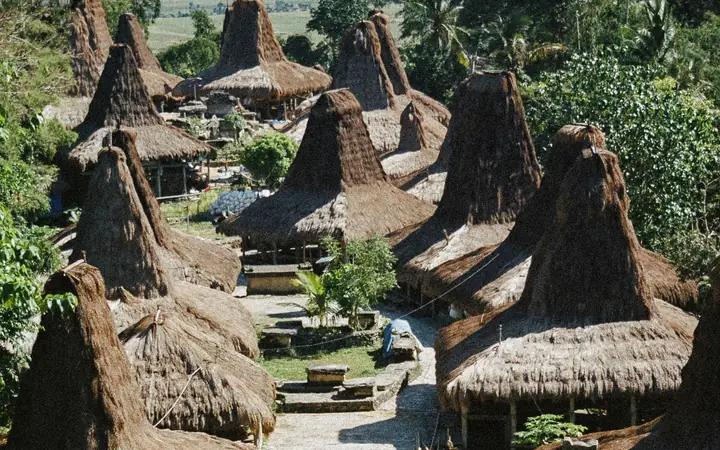
Praijing Village
A hillside village near Waikabubak where dozens of tower-roofed houses are arranged around a stone courtyard.
Waterfall
Lapopu Waterfall
Tiered falls inside Manupeu Tanadaru National Park, with a green-blue pool at the base.
Beach
Watubela Beach
A beach defined by rock formations along its shoreline, still quiet and rarely on the standard tour circuit.
East Sumba
Hills
Tanarara Hills
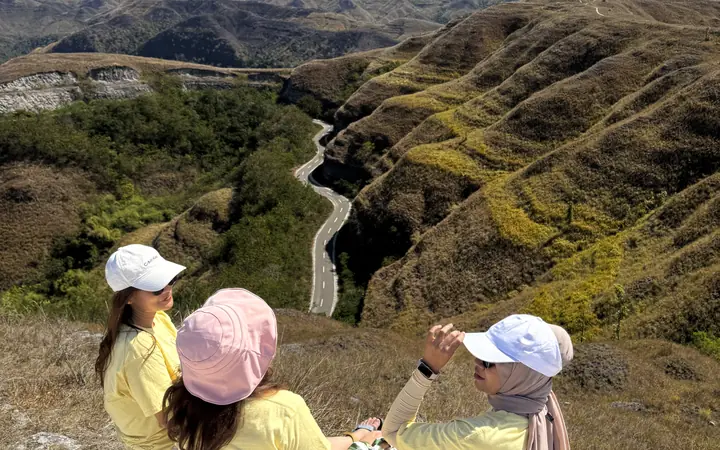
Rolling savannah hills with a winding road cutting through the valley below, turning from green to gold with the seasons.
Waterfall
Tanggedu Waterfall
A waterfall inside a stepped rock canyon with blue pools, reached well beyond where the car can go.
Waterfall
Waimarang Waterfall
A clear turquoise pool ringed by limestone walls, reached by descending a natural staircase of rock and roots.
Beach
Walakiri Beach
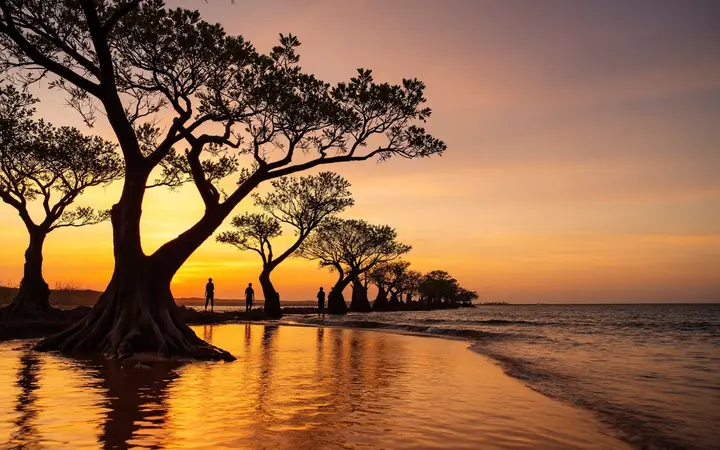
A beach scattered with dwarf mangroves shaped like dancing figures, and the best place in East Sumba to watch the sun go down.
Culture that is still lived
Ikat weaving where every motif carries meaning, the Pasola ritual, and villages built around ancestral tombs. These are not heritage displays — people live in these houses and practise these traditions.
Visiting a traditional village means walking into someone's daily life. We arrange permission and the customary offering with the village elders, then explain the etiquette before you go in: what may be photographed, which areas are closed, and when a visit should be postponed.
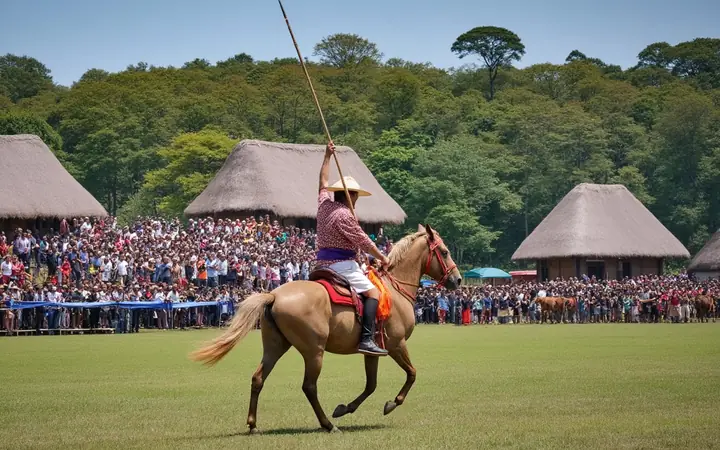
Pasola is held in February and March. The date is set by the village priests once the sea worms appear, so it is only confirmed about two weeks ahead.
When to come
November – June
Green savannah
The grasslands are green and the waterfalls run hard. Rain falls in the afternoon, and some dirt roads turn slippery.
July – October
Golden savannah
The grasslands turn gold — the view most people come to photograph. Waterfalls shrink and the air gets dusty.
February – March
Pasola season
The Pasola ritual is held in West and Southwest Sumba. The date is set by the village priests once the sea worms appear, so it is only confirmed about two weeks ahead.
Why a local operator
Our office is in Waikabubak, not Jakarta or Bali. Our drivers are Sumbanese — they speak the local languages, know the roads without a map, and know what time to arrive at each place so you get there before anyone else.
We tell you the real conditions before you book, not after you arrive. If the waterfall you had in mind is running low this month, we say so and suggest something better.
Tell us your dates and how long you have
Send your arrival date, flight time and group size. We reply with a day-by-day plan and a full price breakdown. The itinerary can be adjusted to suit you.